


Twelve papers, two abstracts: how I got through a literature review
A NoCrast comic story: Jonas, and the twelve papers he had to review for an interview task.
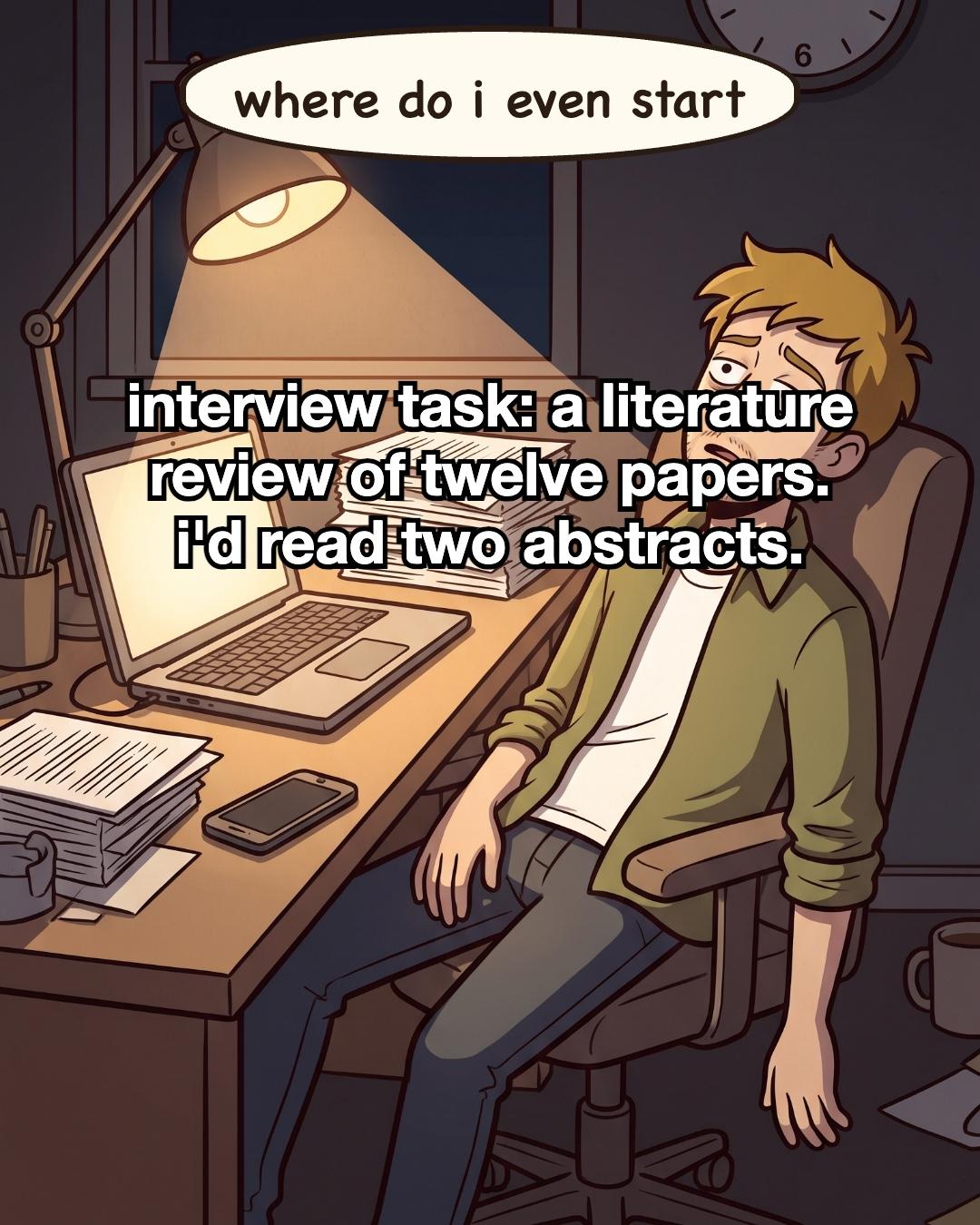
The interview task was a literature review of twelve papers. At midnight I had read two abstracts. The printed stack sat next to my laptop, my phone lay face-down by my hand, and I sat there thinking: where do I even start?
So I checked my phone. Just for a minute. Then an hour was gone. The next morning I was on the sofa in yesterday's clothes, phone in hand, and the papers were still on the desk, untouched. It felt too big to start.
So I let NoCrast break it down. I typed my goal in my own words: read the 12 papers for my literature review. It split it into small steps I could actually do.
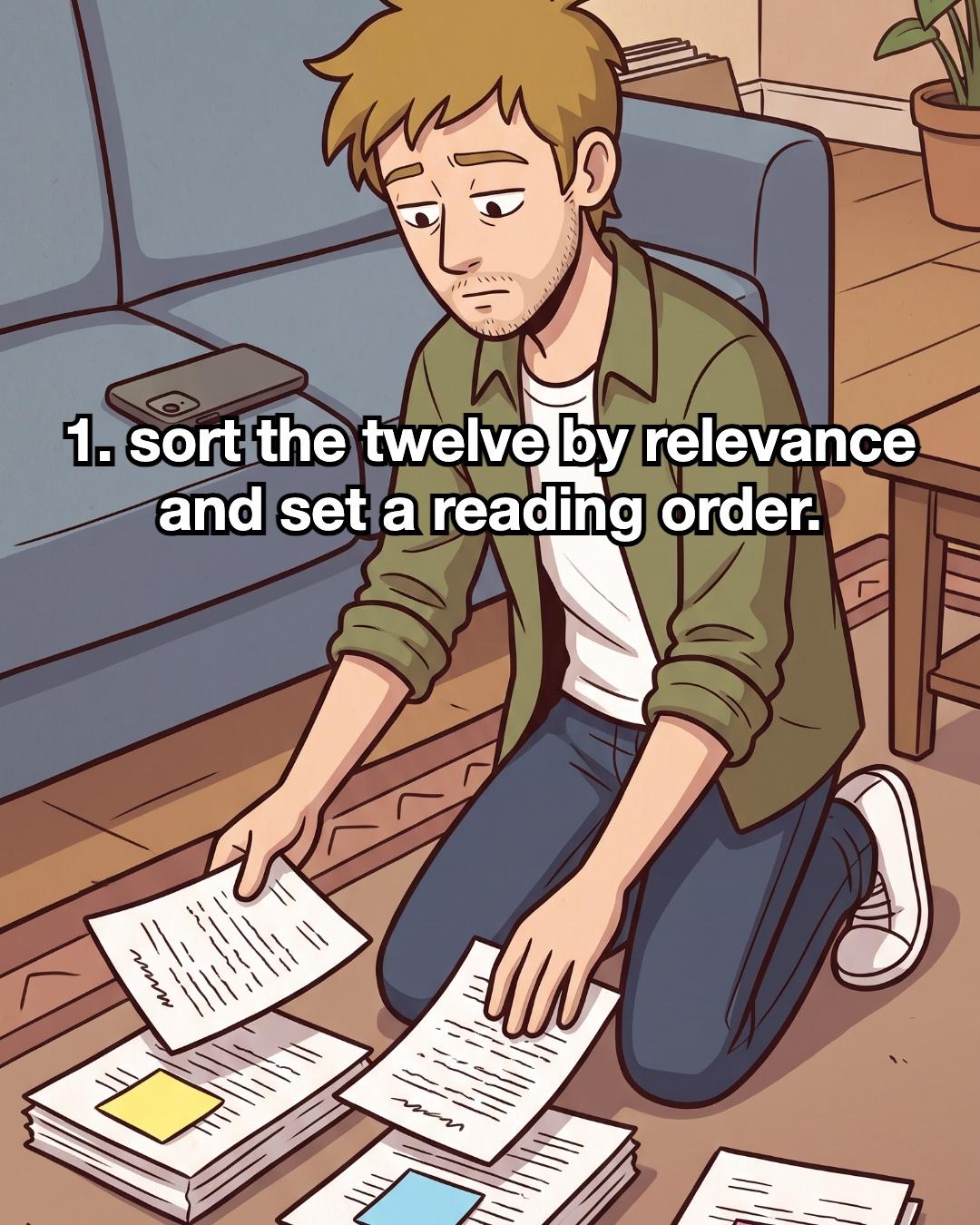
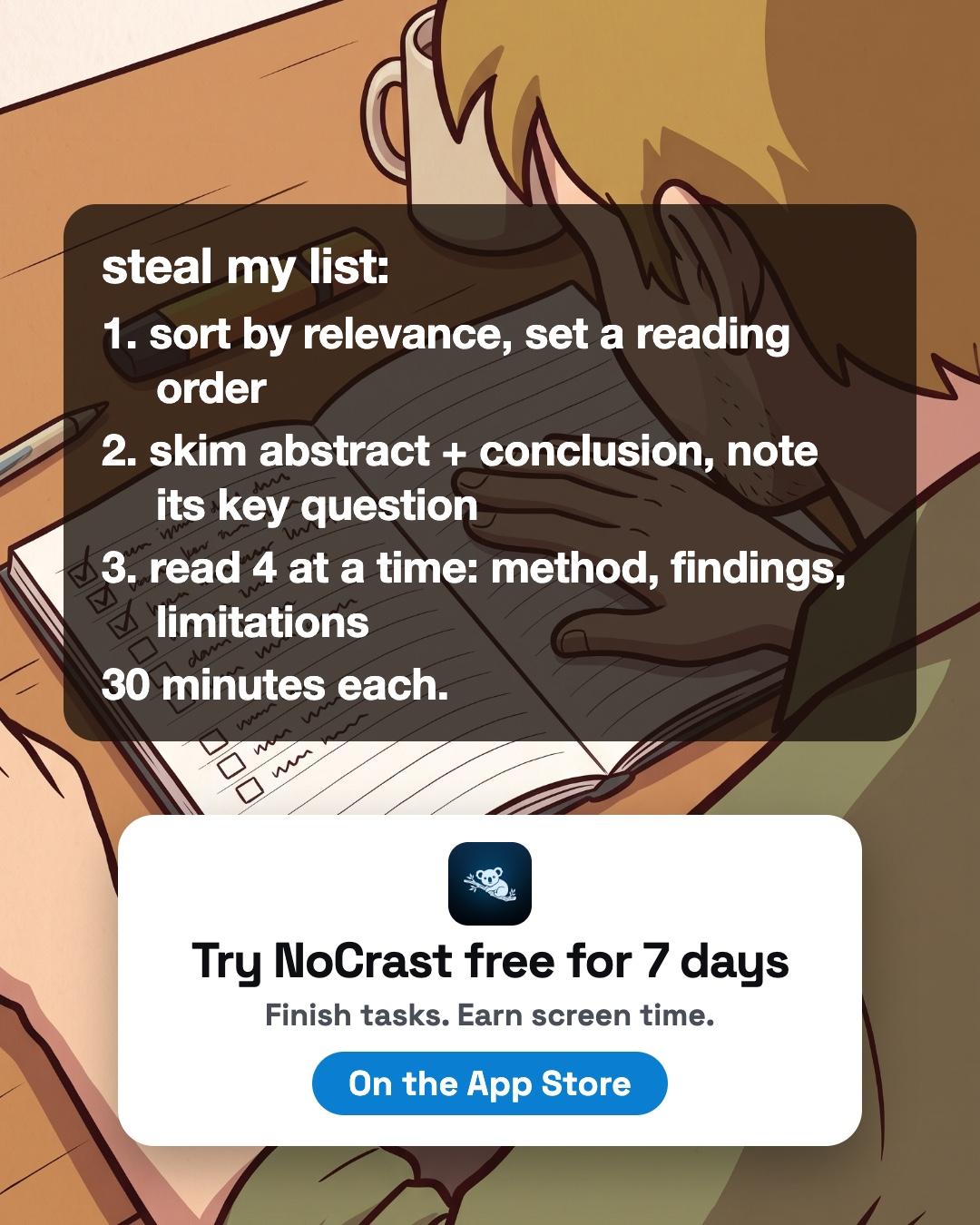
First, I sorted the twelve by relevance and set a reading order. I knelt on the living-room floor and made three piles, with a sticky note on top of each.
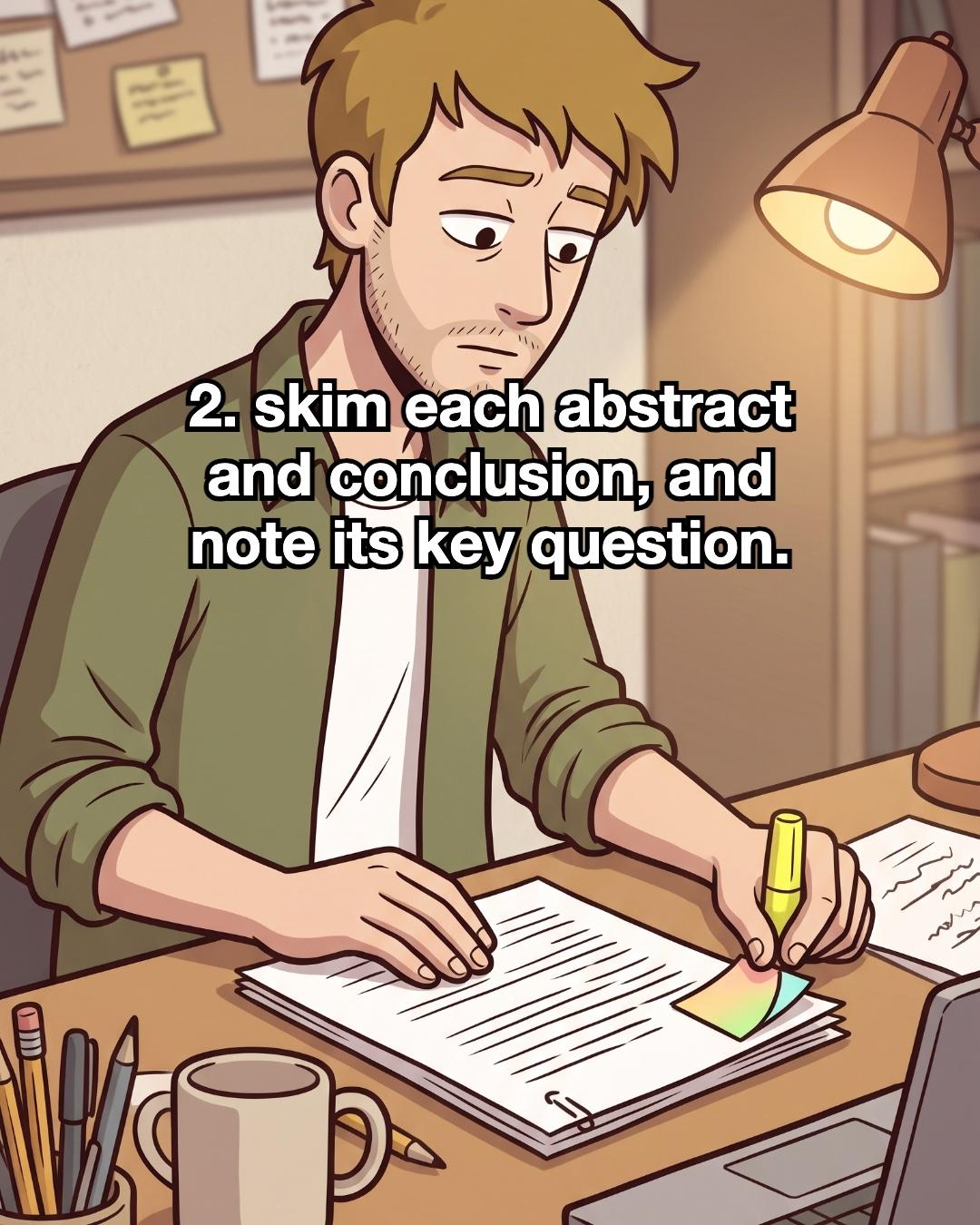
Second, I skimmed each abstract and conclusion and noted its key question. Highlighter in one hand, a small note on each front page. One line per paper.
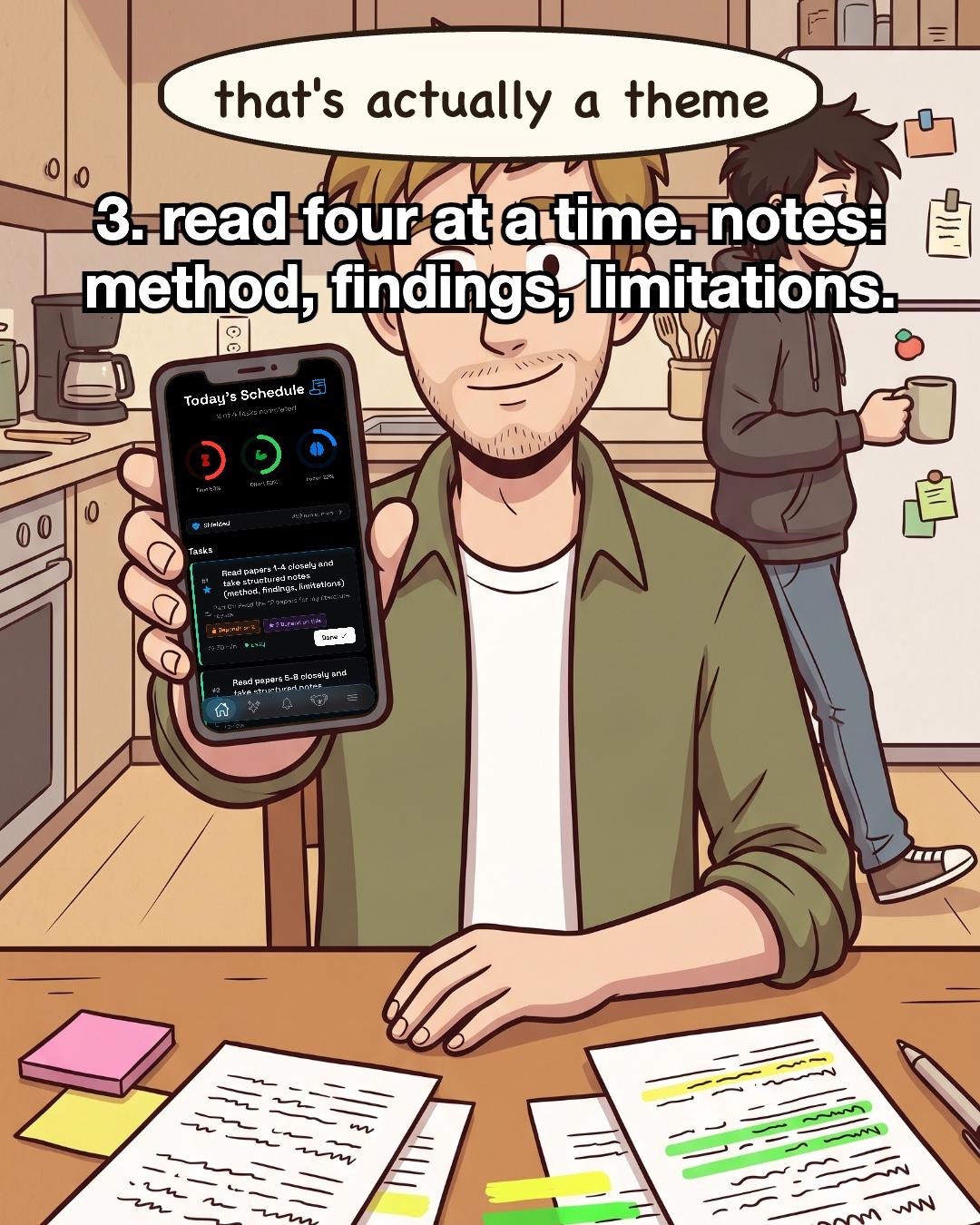
Third, I read four at a time, with the same three notes for each: method, findings, limitations. Somewhere in that batch, at the kitchen table, I saw the same idea turn up in more than one paper. That's actually a theme. For the first time, the stack looked like something I could write about.
Each step was about thirty minutes. Here's my list. Steal it for your next one.
How to read 12 papers for a literature review
Get your phone out of the way first. One quick check is how a whole evening goes. Put it in another room, or let NoCrast keep your distracting apps on hold until your tasks are done. Every step you finish earns screen time on the apps you held.
Sort the papers by relevance and set a reading order. Don't start at paper one. Make three piles: core, useful, background. Read the core pile first, so your best material shapes the review.
Skim each abstract and conclusion, and write down its key question. You're not reading the paper yet. You're finding out what it's about. One line on a sticky note on the front page is enough. Doing all twelve this way already gives you a map of the field.
Read four at a time, with the same three notes each: method, findings, limitations. Four is a batch you can hold in your head. Using the same headings for every paper means you can compare them side by side later, instead of rereading.
Look across your notes for themes. When two or three papers ask the same question, use the same method or share a limitation, write it down. A literature review is usually organised around these themes, not paper by paper. Your notes from step 4 will show you where they are.
Keep each step small enough to start today. About thirty minutes a step is a good size. If a big goal has no first step, NoCrast's AI breaks it into tiny, doable tasks, and whatever you don't finish comes back tomorrow.
You don't need to read all twelve tonight. Sort the pile, skim one abstract, and the next step gets easier.
 NoCrast
Putting something off, too?
Tell NoCrast what you keep avoiding. It breaks it into steps small enough to start today, and keeps your distracting apps on hold until they're done. Finish a step, earn screen time.



New subscribers get the first 7 days free, then NoCrast Premium monthly or yearly. Cancel any time.
Found this helpful? Share it with others!