How to Block Apps on iPhone (iOS 27)
Updated 15 November 2026 · for iOS 27, with the steps for iOS 26 and earlier at the end.
Your iPhone can limit any app without installing anything: it is part of Screen Time. In iOS 27, Screen Time limits apps in groups called categories. You give a category a daily allowance, choose the hours it is available, and keep a few apps always open. This guide goes through it step by step, with screenshots from iOS 27, and ends with how to keep the limits from being skipped.
In this guide
- Before you start: check your iOS version
- Step 1: Open Screen Time
- Step 2: Put the apps you want to limit in a category
- Step 3: Set the daily time
- Step 4: Choose the hours apps are available
- Step 5: Keep the apps you always need
- Or block one app completely
- Step 6: Stop the limits from being skipped
- On iOS 26 or earlier
- Why app limits often don't hold
- How to block apps on iPhone with NoCrast, and know what to do instead
Before you start: check your iOS version
Open Settings › General › About and look at iOS Version. The steps below are for iOS 27. On iOS 26 or earlier the same settings have different names; they are at the end of this guide.
Step 1: Open Screen Time
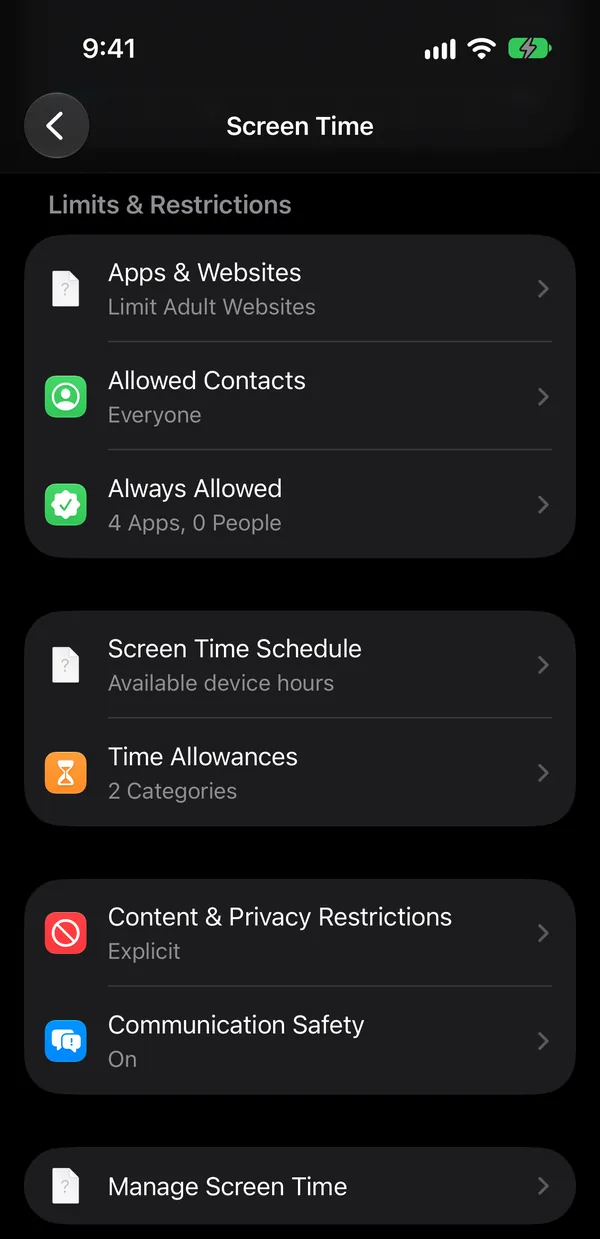
Open Settings and tap Screen Time. Under Limits & Restrictions you will see the settings this guide uses: Always Allowed, Screen Time Schedule and Time Allowances.
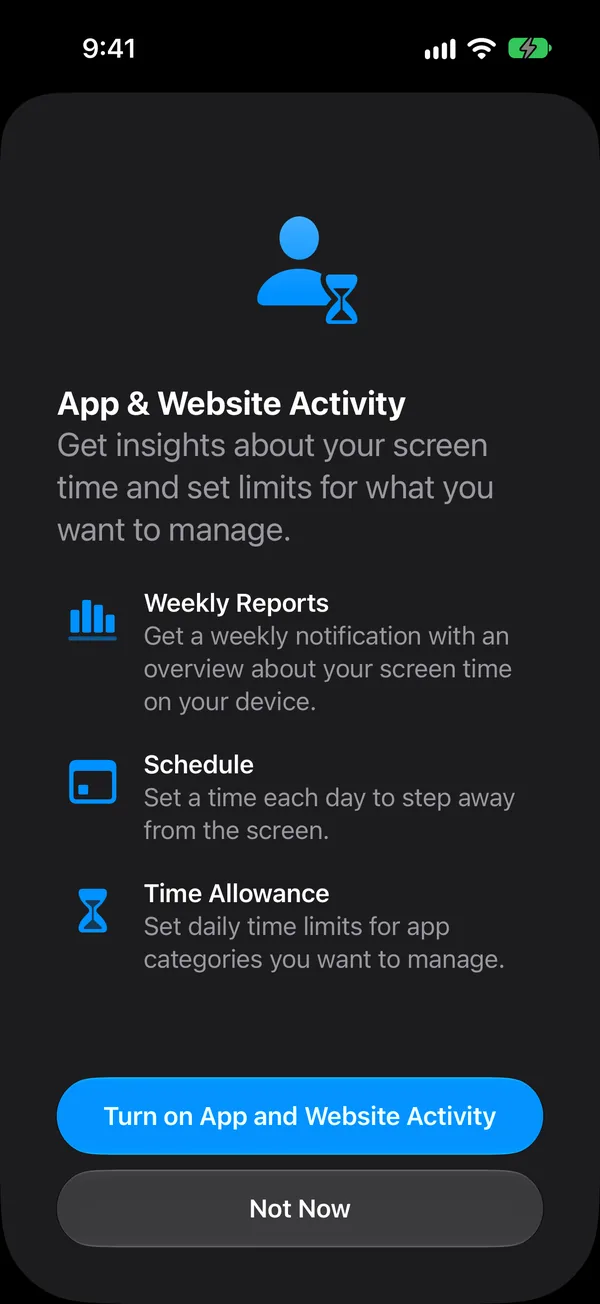
Tap Time Allowances. The first time, your iPhone explains App & Website Activity: it reports how much you use your phone and is needed for time limits. Tap Turn on App and Website Activity.
Step 2: Put the apps you want to limit in a category
Time Allowances work on categories, not on single apps. At first there is one category, All, set to Unlimited. Tap Manage Categories.
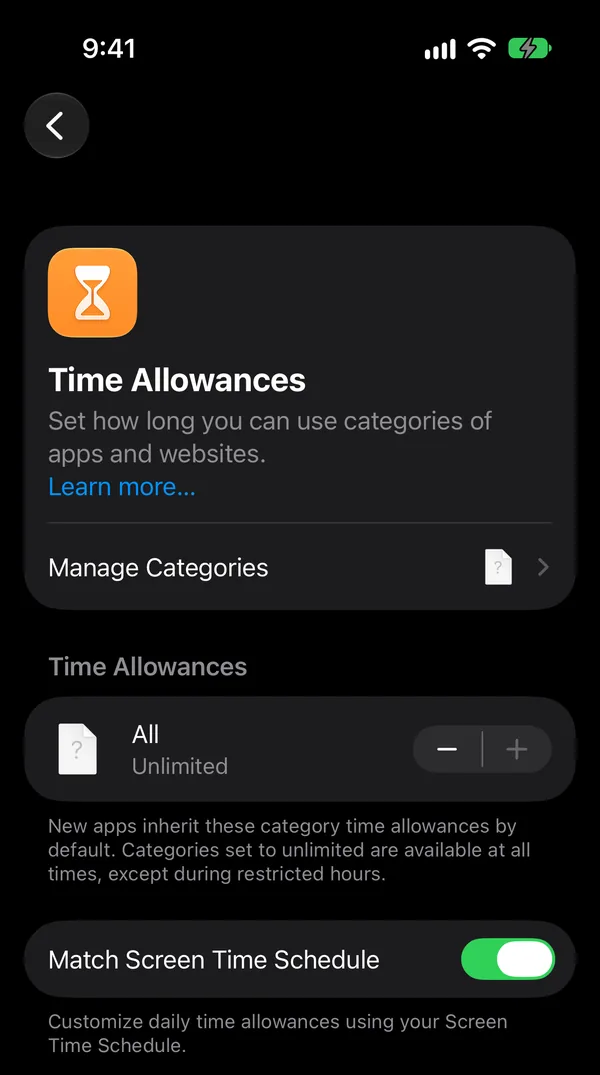
Tap + at the top right and choose a category: Entertainment, Games, Social Media, or Custom for your own.
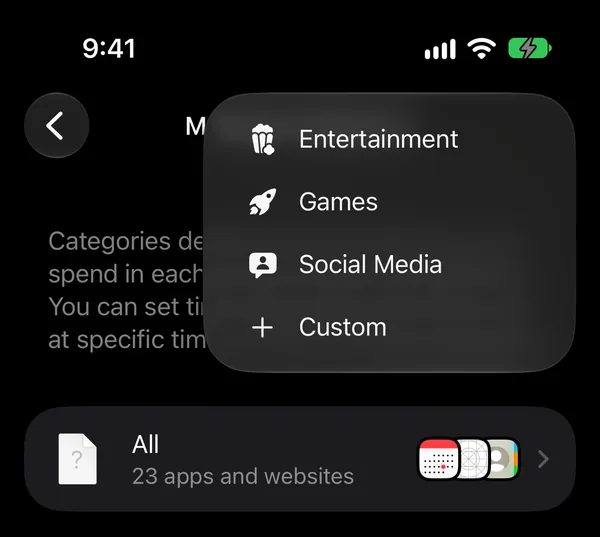
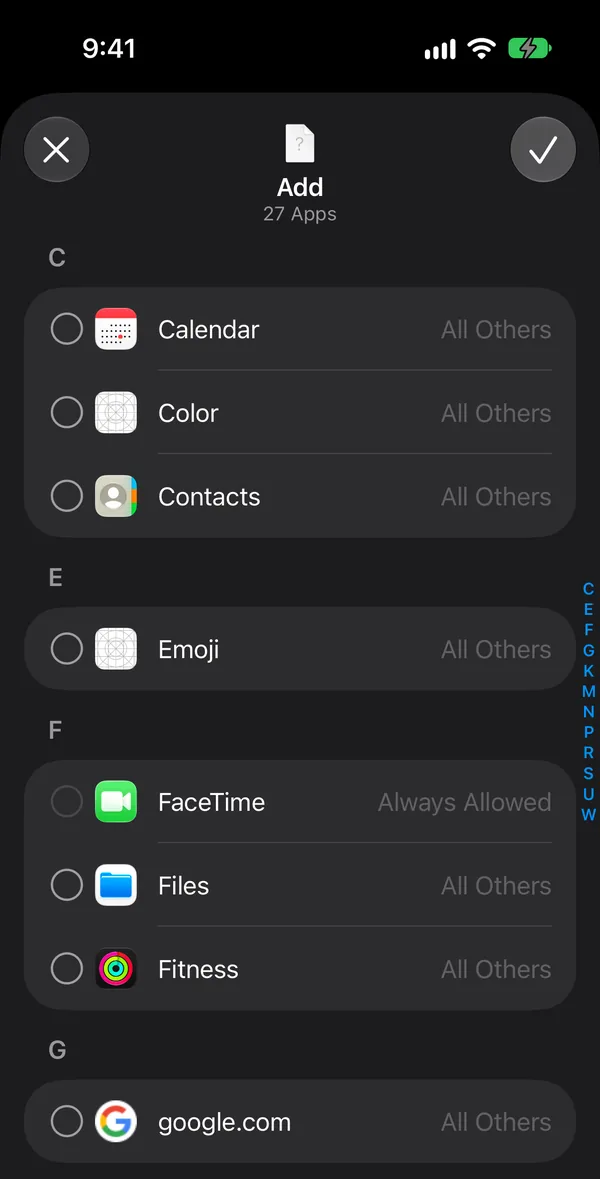
Entertainment, Games and Social Media fill themselves: your iPhone puts the matching apps in them, and the category says Automatic. To limit one specific app, open its category in Manage Categories and tap Add. You get a list of every app and website on your phone, each with the category it is in now. Tick the apps you want and confirm.
Step 3: Set the daily time
When you add a category, your iPhone first asks when it is allowed (All Day, 6 AM to 11 PM, unless you change it). Tap Continue. Then set Every Day with − and +: it starts at Up to 30 min. Tap Done.
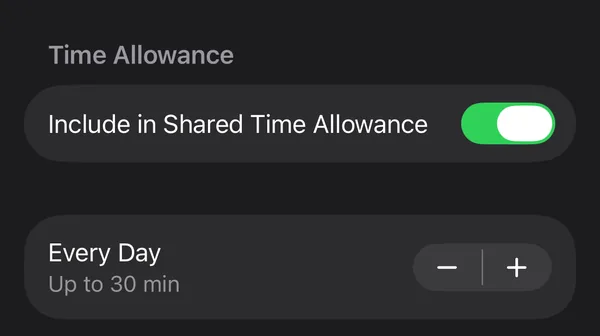
With Include in Shared Time Allowance on, the category counts toward one total with the others. Turn it off if this category should have its own time.
Step 4: Choose the hours apps are available
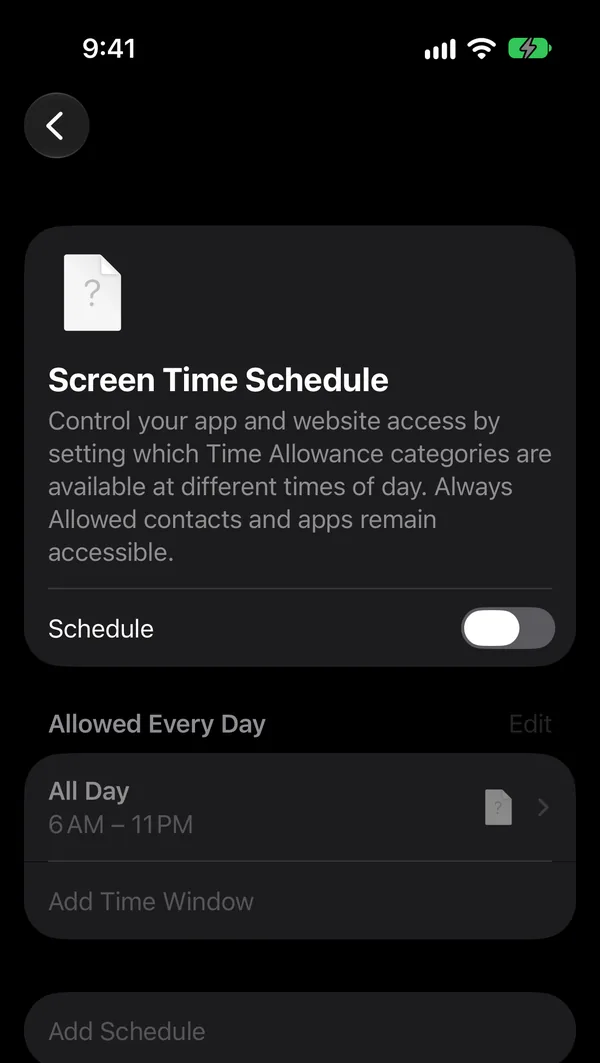
A daily allowance limits how long. A schedule limits when. Go to Settings › Screen Time › Screen Time Schedule, turn on Schedule, and set the hours for each category with Add Time Window or Add Schedule. In Apple's words, it sets "which Time Allowance categories are available at different times of day". Use it for working hours or the hour before bed.
Step 5: Keep the apps you always need
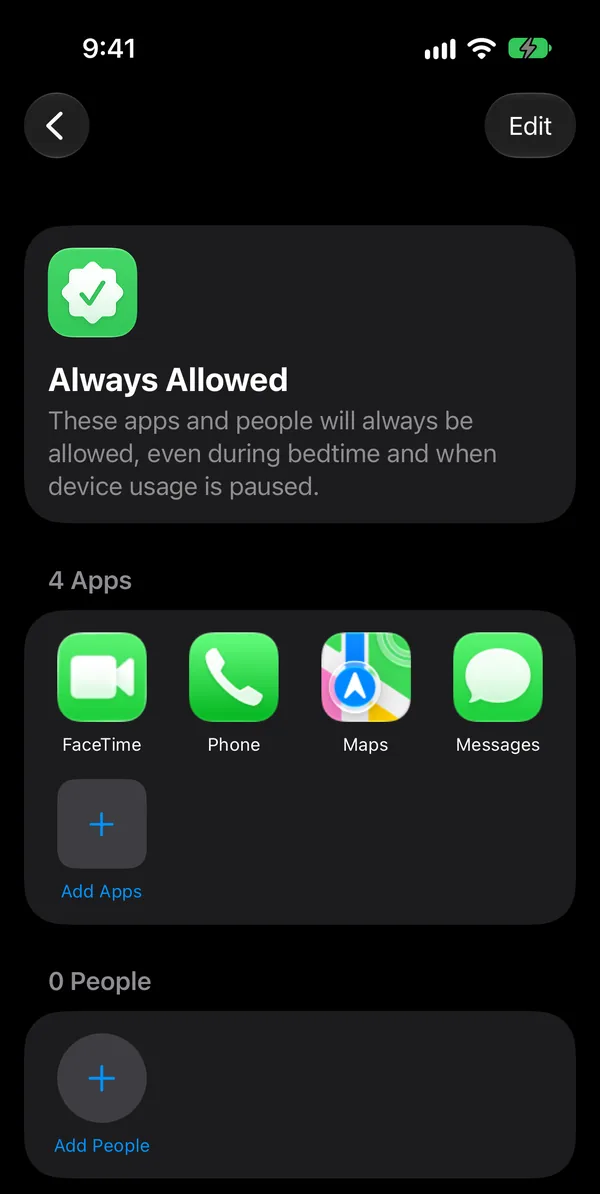
Under Settings › Screen Time › Always Allowed are the apps that stay open "even during bedtime and when device usage is paused". Phone, Messages, FaceTime and Maps are there to start with. Tap Add Apps for anything you need for work or study.
Or block one app completely
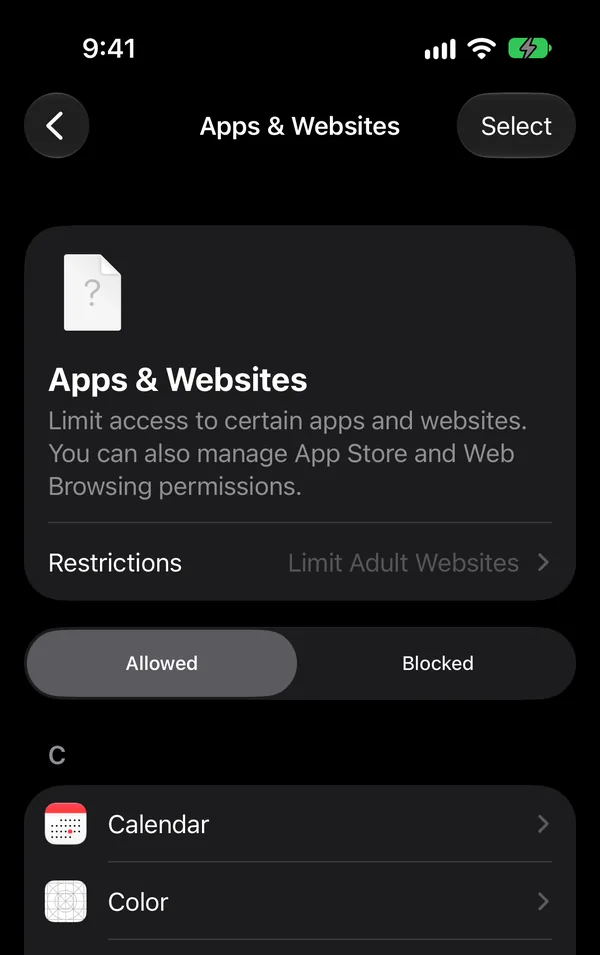
A daily allowance still lets you in for a while each day. If you want an app gone completely, not limited, iOS 27 can do that too, one app at a time. Go to Settings › Screen Time › Apps & Websites. The page lists your apps under Allowed; tap the app you want gone.
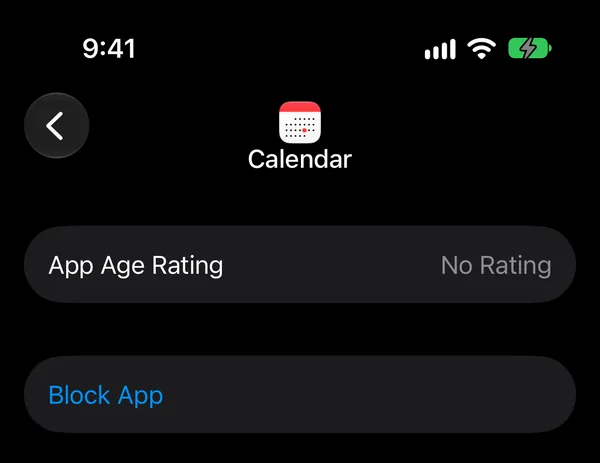
On the app's page, tap Block App and confirm. The app moves to the Blocked list and won't open until you allow it again there.
Like every Screen Time setting, this can be undone in a few taps, so the passcode in the next step matters here too.
Step 6: Stop the limits from being skipped
By default, Apple notes, Screen Time limits can be ignored once you reach them. To make them stick, set a Screen Time passcode: Settings › Screen Time › Manage Screen Time › Lock Screen Time Settings. It is a separate code from your phone's own passcode, and once it is set, Screen Time settings can only be changed with it.
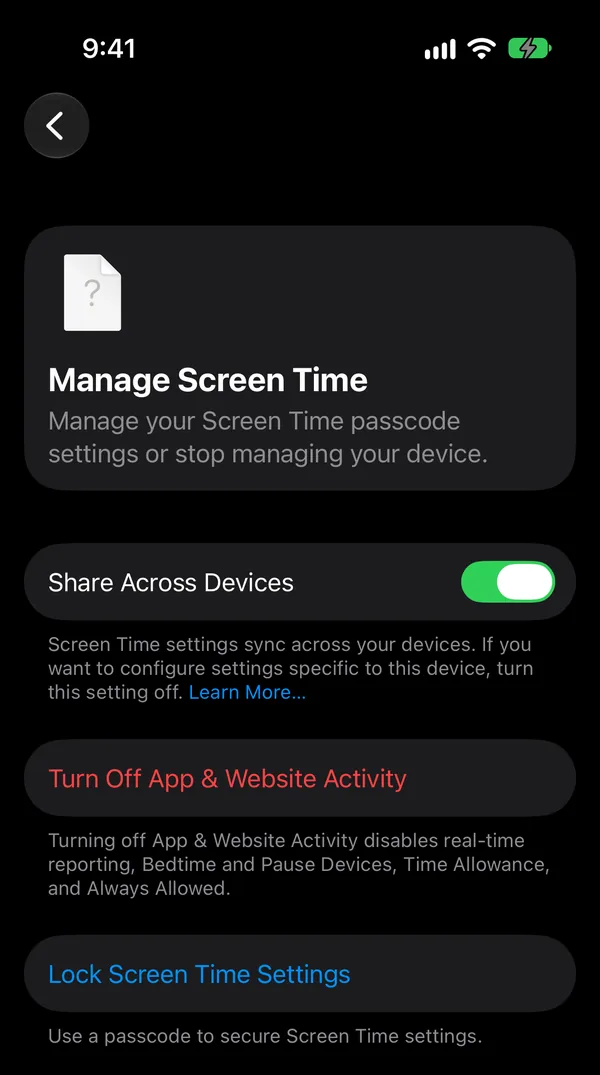
If you set the passcode yourself, you know it, and the limit is one tap away. It works better if someone you trust chooses it. Apple also recommends adding Screen Time Passcode Recovery with your Apple Account, so the passcode can still be reset if it is forgotten.
On iOS 26 or earlier
The same idea, with older names (from Apple's support pages for iOS 26):
- Limit apps: Settings › Screen Time › App Limits › Add Limit. Choose one or more categories, or tap a category to pick single apps. Set the time, and use Customize Days for different limits on different days.
- Set hours: Settings › Screen Time › Downtime. Only calls, messages and the apps you allow are available during downtime. With a Screen Time passcode, "Block at Downtime" stops apps from opening at all instead of only dimming them.
- Always open: Settings › Screen Time › Always Allowed, as above.
Why app limits often don't hold
A time limit asks you to stop at the moment you least want to: in the middle of a feed, a game or a reply. If it can be skipped with one tap, it usually is. And a limit only says how long you may use an app. It says nothing about what you were supposed to be doing instead, so the time you get back tends to go to the next app.
How to block apps on iPhone with NoCrast, and know what to do instead
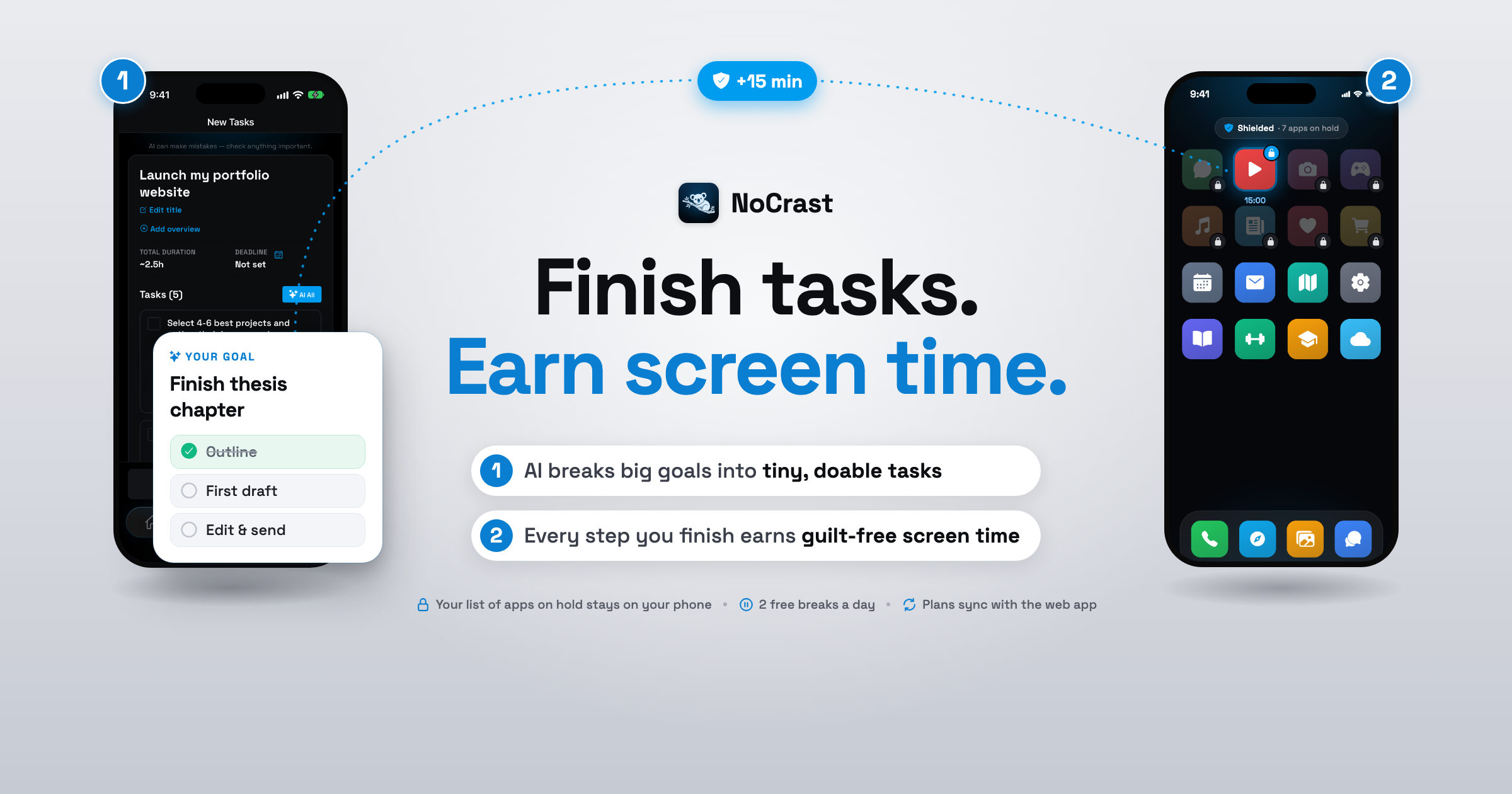
Screen Time decides how long you can use an app. NoCrast decides what comes first. You choose the apps that pull you away, and on the days you pick they stay on hold until your tasks are done. And NoCrast doesn't stop at holding them: it also tells you what to do with the time you get back, one small step at a time.
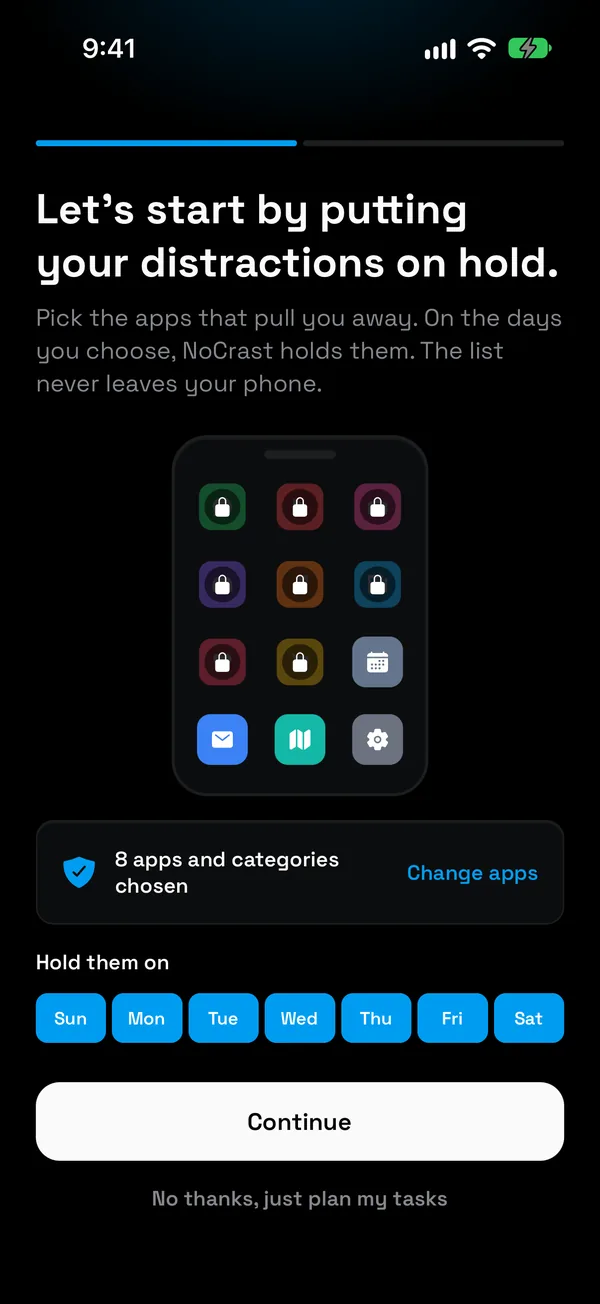
Step 1: Choose the apps that pull you away
When you set up NoCrast, pick the apps and categories you want held (social media, games, video, whatever gets you), and the days you need help most. On iPhone, NoCrast uses Apple's Screen Time for this, so the list of apps you choose never leaves your phone.
Step 2: Tell NoCrast what you keep putting off
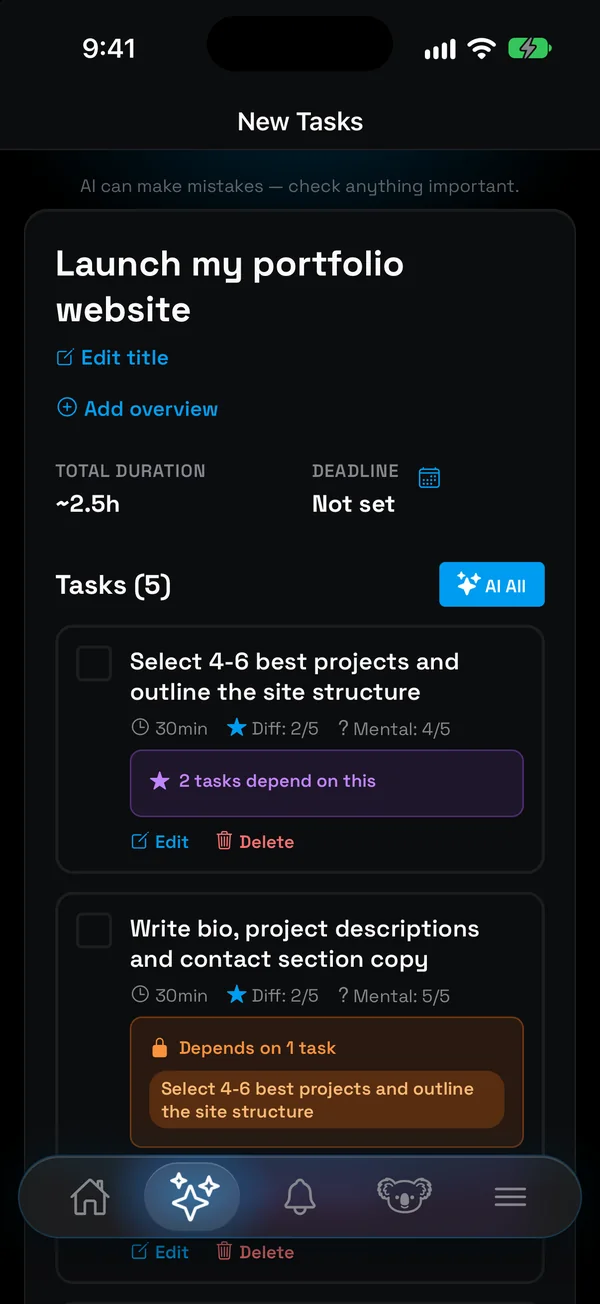
Describe a goal in your own words, like "Launch my portfolio website" or "Finish my thesis chapter". NoCrast's AI breaks it into small, doable tasks, each with its time, effort and focus, and the first one is small enough to start today. Tasks know what they depend on, so you always see what is ready to start. Already have a list? Paste it, or take a photo of it.
Step 3: Plan today in a minute
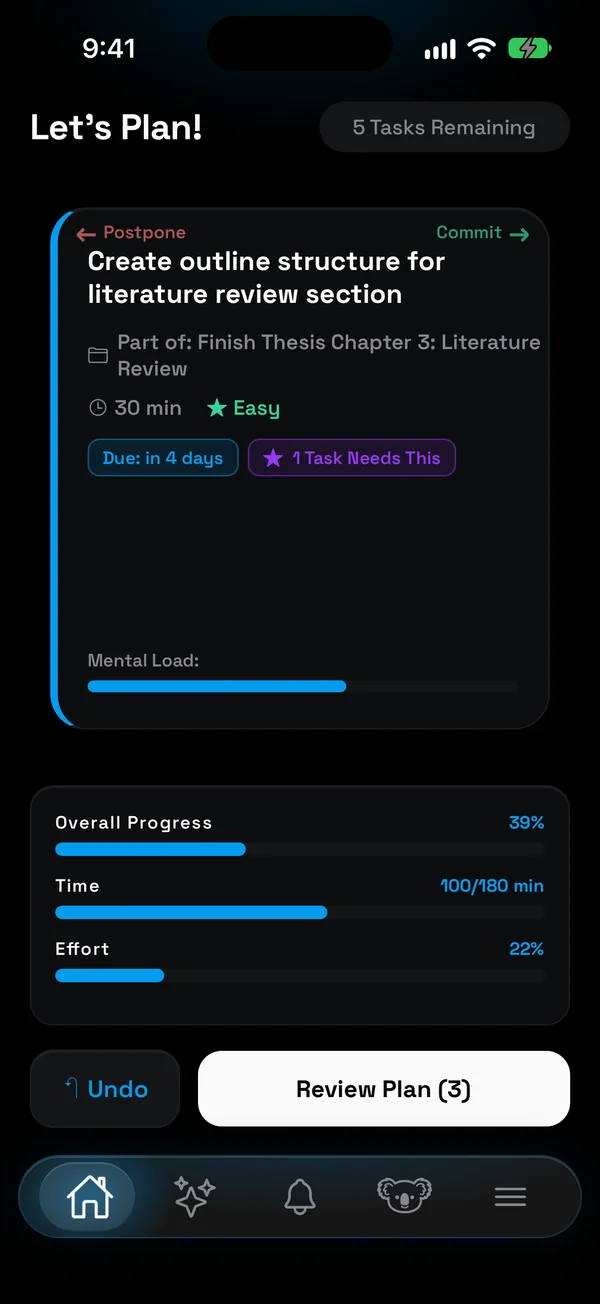
Each day, swipe through your tasks: right to commit, left to postpone. Rings for time, effort and focus show when you are about to take on too much, and whatever you don't finish comes back tomorrow. So when you have time, you already know what to do with it.
Step 4: Open a held app, see your next step
When you reach for a held app out of habit, you don't get the feed. You get the step you are on and the minutes it earns. That moment of reaching for your phone becomes a reminder of what you meant to do.
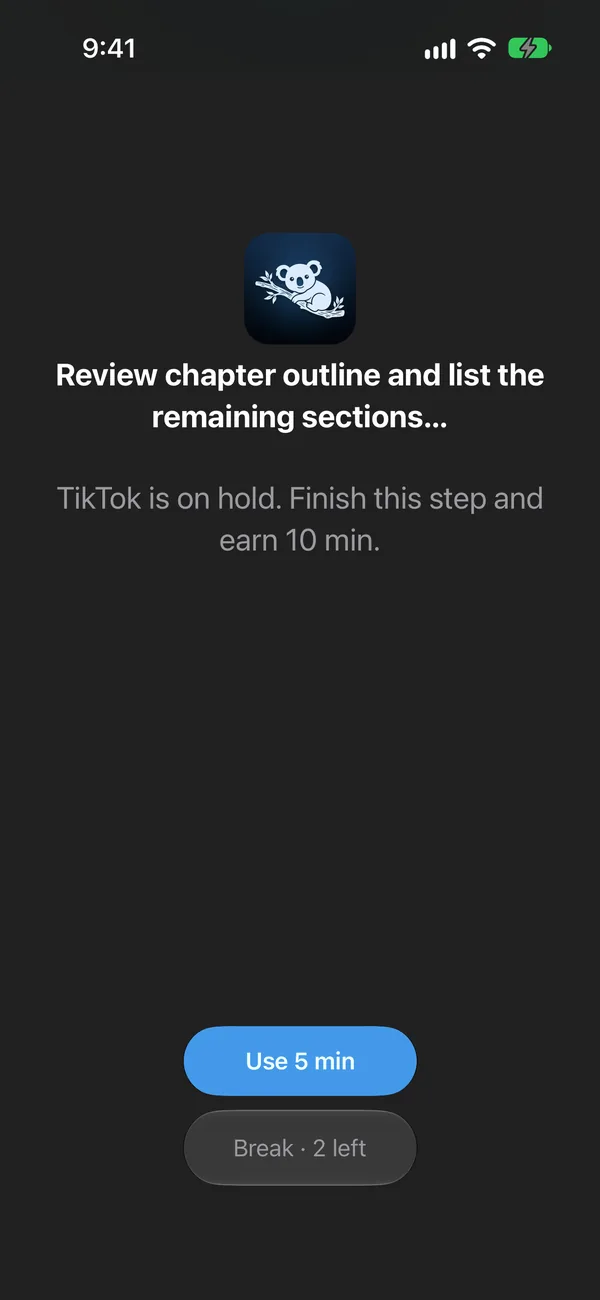
Step 5: Finish the step, earn the minutes
Tick the task off and the minutes are yours, to spend on the held apps in 5, 10, 15 or 30 minute breaks. Hard or boring tasks earn a little more, so the dull steps count for something. Need a minute in the middle of a conversation? Two short free breaks a day are there for that.
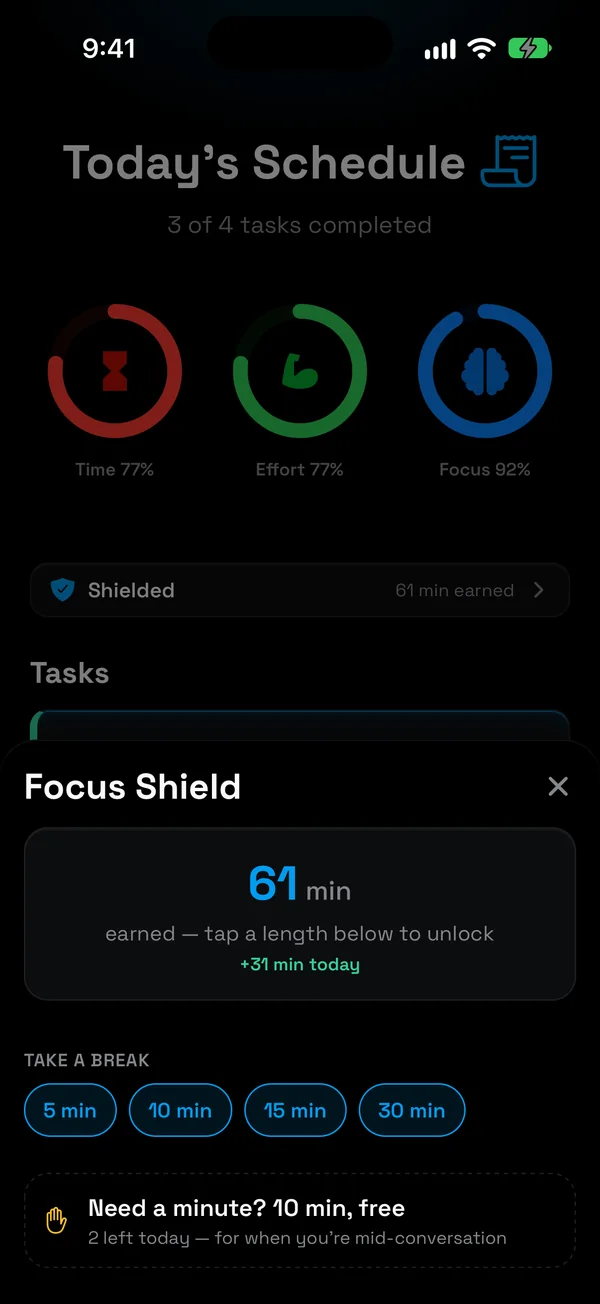
Step 6: Get through the plan, and the day is yours
Finish everything you planned for the day, and your apps are free for the rest of it, with no limit to argue with. Your progress, the minutes you earned and what is left are all on one screen.
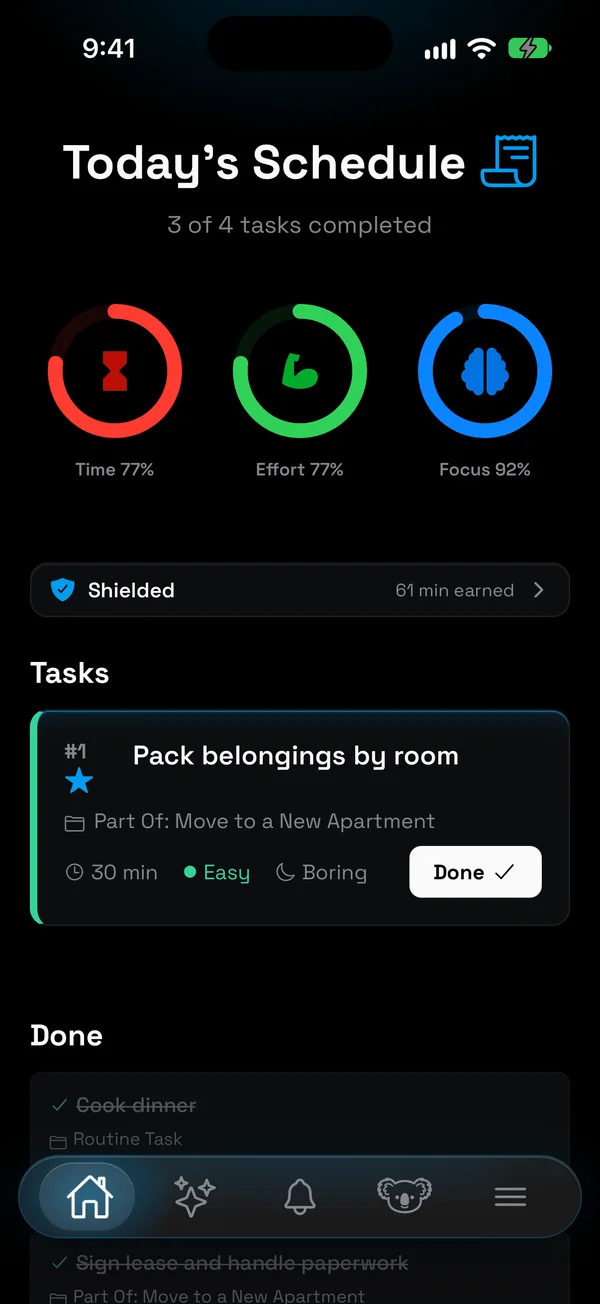
Screen Time or NoCrast?
| Screen Time | NoCrast | |
|---|---|---|
| What it limits | Time per category of apps | The apps you choose, until your tasks are done |
| When you open a limited app | The limit, which can usually be ignored without a passcode | Your next step and the minutes it earns |
| The time you get back | Up to you | A plan: small steps, and today's few tasks |
| Getting time on the apps | Wait for the next day or the next time window | Finish a task and earn it, plus two short free breaks a day |
| Where | iPhone, iPad and Mac | Apps on hold on iPhone and Android; your plan on both and on the web |
They also work together: keep a Screen Time passcode for the limits you never want to touch, and let NoCrast hold the apps that get between you and your work.
Get NoCrast on the App Store or Google Play.

Found this helpful? Share it with others!